
Are we over exaggerating in our title? Perhaps. But do we love to make sweeping statements? Yes, especially when there’s truth to them!
Let’s take a second to imagine a scenario together… You’ve moved to the Netherlands either for work, for school, or even for love. You’ve finally found a house despite the horrendous housing market, you’ve started working or studying, and you’ve begun meeting people.
It was only ever going to be a matter of time before someone voiced the dreaded words ‘Have you started learning Dutch yet?’ And yes, you’ve begun with Duolingo, perhaps you’ve signed up to a Dutch course, but you’re finding your feet, and your reply is something along the lines of “Um, yeah, a bit, I’ve been trying.”
Dutch is famous for being difficult in the first few levels, and learning the language can feel like a drag at first. And so it’s only normal to look for ways to bring the language to life, and to use it to build connections, which, at the end of the day, is the reason why we learn languages, to communicate better with one another, right?
Moving to a new country, combined with wanting to meet new people means that language cafes are a must-do, for any language learner. But how do we know if they are as meaningful as we need them to be?
The key to an effective language cafe is structure. A good structure, developing the course of the language cafe, and the topics that are discussed during it, can mean the difference between you losing faith you’ll ever develop your language skills, and leaving feeling as though your brain has spent an hour at the gym – in a good way.
At Una Paloma Blanca, we follow one strict rule, okay two, we follow two strict rules:
- Language cafes have a purpose, an objective, something to make them sparkle.
- They are FUN.
Ask anyone who has done a language course at UPB and they’ll tell you the same thing, we like to do things the fun way. And while meeting new people and talking about how you ended up living in the Netherlands is fun, we can’t forget rule number one.
So how do we do it?
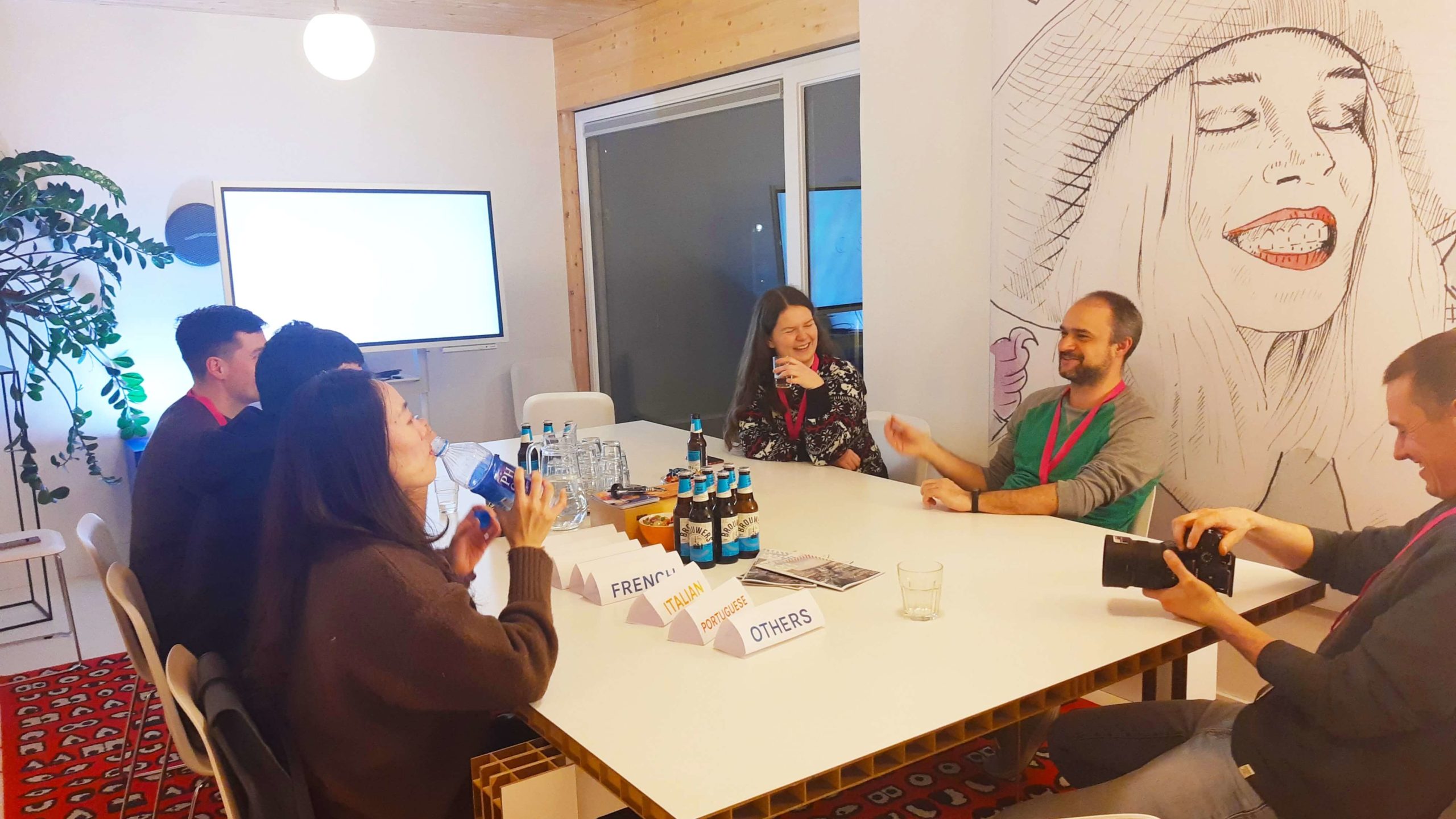
Imagine you’re the language cafe coordinator for the day. You’ll begin by walking through the space, images of tables and chairs spinning in your mind, thinking about the different ways they can be laid out to promote conversation and inclusion.
Next you’ll take a look at the guest list, how many people are coming? How many of our students are coming? How many new faces will we see tonight? This is important because as language cafe hosts, we need to make the space inclusive and accessible for everyone coming. This also tells us how many language tags we should have ready at the door.
Next, we plan our languages for the evening. More often than not, we’re made aware of the different language that will be spoken at the language cafes, which helps us plan different sections of the cafe.
Now you have your people, your languages, and an idea of how the space is going to look, there are just two more questions you have to ask yourself before you’re ready to host your UPB language cafe; What are we going to do? And what are we going to talk about? This might seem like two very vague questions, but they do indeed take some planning.
What are we going to talk about?
To get you feeling as though your brain has been to the gym, we supply relevant topics catered to the different levels of language ability. For the beginners, this could mean talking about vacations, your favourite cities, where you come from, and who you live with.
For the higher levels we encourage conversations around society, the environment, experiences you had as a child (we all know the past tense can be difficult in any language!). The idea is to get you speaking about the things that matter to you, that you perhaps haven’t spoken about in your new language, or heard what other people have to say.
How are we going to do it?
If you ask me, I’m all for games. They’re fun, engaging and they’re a great way to break the ice. In Rotterdam, we have a big board game fanbase, who have come to expect a board game corner during their language cafes – and we are always more than happy to oblige.
We supply prompts, questions, interactive games on your phones, and of course, music!
With all this in the bag, you’ll be ready to host your first UPB language cafe. Now don’t forget, while the cafe is happening, jump in and out of conversations to check that people are comfortable, and that your planning is paying off.
Because, like the title of this blog post suggests, going to a language cafe is useless, unless the things I mentioned above are taken care of. Okay, slightly more things than the title suggests, but just like learning a language, putting together a UPB language cafe takes a lot of care and attention, so we can be sure you’ll leave us, already thinking of the next.
See you there?
Get your tickets here