
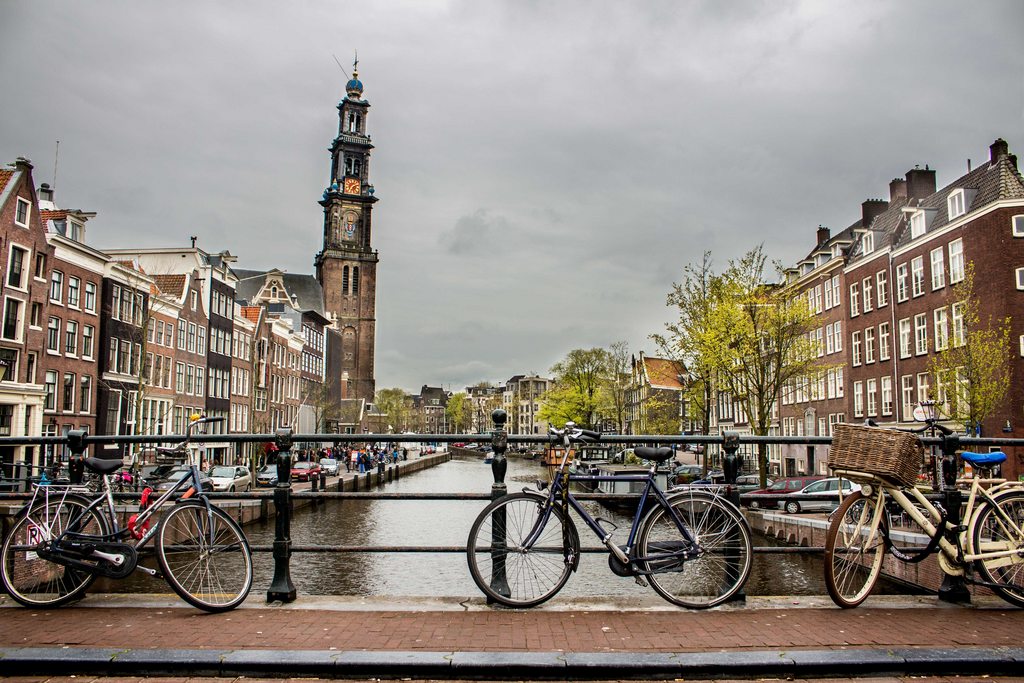
1 – The Dutch Obsession with Bicycles
The Netherlands is often dubbed “the land of bicycles,” and it’s not without reason. With approximately 23 million bicycles in the country, there’s an average of 1.3 bicycles per person – more bikes than people! The country’s flat terrain and the extensive network of bicycle paths make cycling a safe and convenient mode of transportation.
However, it’s a misconception to believe that everyone in the Netherlands bikes all the time. For longer journeys or trips to distant cities, cars and public transport, which is considered one of the best in the world, are the preferred modes of transportation.
See also: 6 things you need to know before moving to the Netherlands
2 – Cannabis Laws in the Netherlands
There’s a prevalent misconception that the Netherlands is a paradise for cannabis enthusiasts. However, the reality is quite different. According to the Dutch Government, drug possession, sale, and production are illegal in the Netherlands. Nonetheless, there is a policy of toleration towards soft drugs, which means that the sale of small quantities of soft drugs in coffee shops is technically a criminal offense, yet not actively prosecuted by the Public Prosecution Service.
Moreover, it’s crucial to note that in some municipalities, only official residents of the Netherlands are allowed to visit coffee shops and purchase cannabis products. You can find more detailed information on this topic here.
3 – Dutch Clogs: A Symbolic Footwear
Dutch clogs, known as “klompen” in Dutch, are iconic symbols of the Netherlands and are readily available in souvenir shops in various sizes. Still, don’t expect to see them in everyday use beyond specific contexts.
Originally designed to protect the feet of laborers like factory workers, farmers, and fishermen, clogs have their origins in the Netherlands, dating back to the early 13th century. While wooden clogs are still worn in farming regions and by some Dutch individuals engaged in agricultural work or gardening, you won’t typically see people wearing them on the streets of Amsterdam in everyday life.
4 – The Dutch and Their English Skills
It’s true that the Dutch are known for their excellent English skills, and some international residents may even find it challenging to practice the Dutch language since many Dutch people communicate in English with them.
However, it’s important to remember that the official language of the country is Dutch, and English serves as a second language. Not everyone in the Netherlands is fluent in English, particularly among older generations and in smaller cities. Additionally, administrative procedures and communication with government entities are conducted in Dutch, underscoring the importance of having a basic level of Dutch for internationals planning to live in the Netherlands.
See also: What does “being multilingual” entail

Dutch Language School in Rotterdam
You can find many Dutch courses in the Netherlands, mostly in international cities such as Amsterdam, Rotterdam, and Eindhoven. If you want to learn Dutch in Rotterdam in an informal and fun atmosphere, go to Una Paloma Blanca.
Una Paloma Blanca Language School in Rotterdam
Are you looking for a Dutch course in Rotterdam? Una Paloma Blanca is a language school in Rotterdam that offers Dutch courses from A1 to C1. It is located five minutes from the city center, at Walenburgerweg 3, 3039 AA.
Find the perfect Dutch course in Rotterdam for you.